Circular products

Three products out of one waste stream

Recovered carbon black and tyre pyrolysis oil are sold to the rubber, plastics, asphalt and fuel sectors, where they replace virgin carbon black and fossil feedstock. Steel is recovered and recycled. The syngas is used inside the plant for process heat. Using these products lets our partners take part in the circular economy and meet their sustainability targets.

Feedstock

A feedstock that pays to be taken

Tyres arrive with a gate fee attached. All of the value sits in the quality of what comes out.

1 billion tyres reach end of life each year — about 25 Mt. Europe alone generates 3.5 Mt at a 91% recovery rate; Norway 65,000 t.

Waste tyre feedstock
€0 – 50 / t
gate fee in parts of the EU
Tyre pyrolysis oil (TPO)
€600 – 750 / t
tracks the EU fuel-oil price
Recovered carbon black (rCB)
€700 – 900 / t
40–60% of virgin carbon black value
Virgin carbon black (VCB)
€1,350 – 1,700 / t
the benchmark qualified rCB is priced against

EU price ranges, mid-2025. rCB pricing depends on quality.
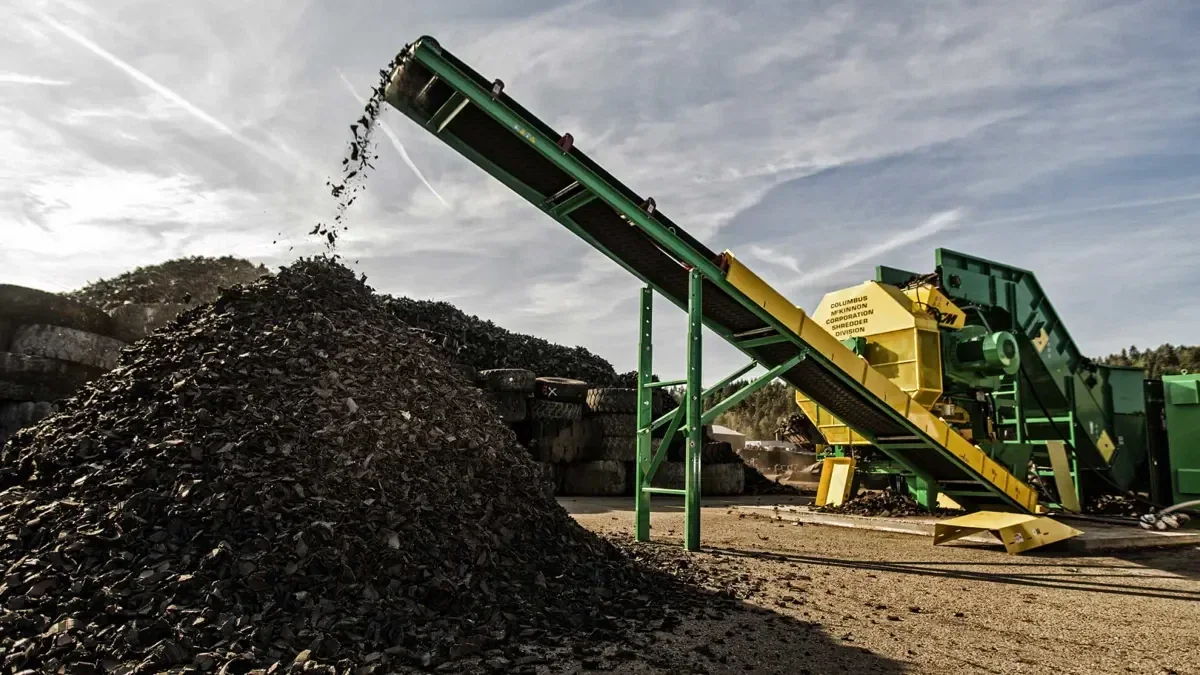
End-of-life tyres being shredded into chips at a tyre recycling yard

The ELT pyrolysis value chain: scrap tyre back to new tyre

Only 14.5% of the world's scrap tyres go to pyrolysis today. The oil side is liquid and easy to sell; the carbon side is where the value – and the closed loop – sit: most char is still burned in cement kilns, and only a small share is finished into recovered carbon black.

The end-of-life tyre pyrolysis value chain, 2023 global volumes Scrap tyres30.9 Mt/yr Collectionshred, de-bead Steel & fibreto foundries Landfill, TDF26.4 Mt other Pyrolysis4.49 Mt (14.5%) Pyro-gasprocess heat TPO1.67 Mt Char1.20 Mt Oil marketsfuel, refining Furnace blacksCB, ~17 kt rCB finishing179 kt Cement kiln1.02 Mt fuel Tyre &rubber · rCB + sCB Closed loop: recovered carbon back into new tyres

2023 global volumes: latest publicly released Weibold estimates (2024); flow structure adapted from Weibold's eco-systems map. Amber = oil route, green = carbon route.
Tyre pyrolysis oil (TPO)

Tyre pyrolysis oil is a versatile, energy-rich liquid produced when the rubber is thermally broken down. As a low-carbon, circular alternative to conventional fossil fuels it has a wide range of industrial uses – from direct combustion to high-value upgrading.

Measured properties of pilot material

Calorific value
~40–42 MJ/kg
Boiling range
180–340 °C
Density
~0.95 g/cm³
Aromatics (GC-MS)
72–74% of peak area

Applications

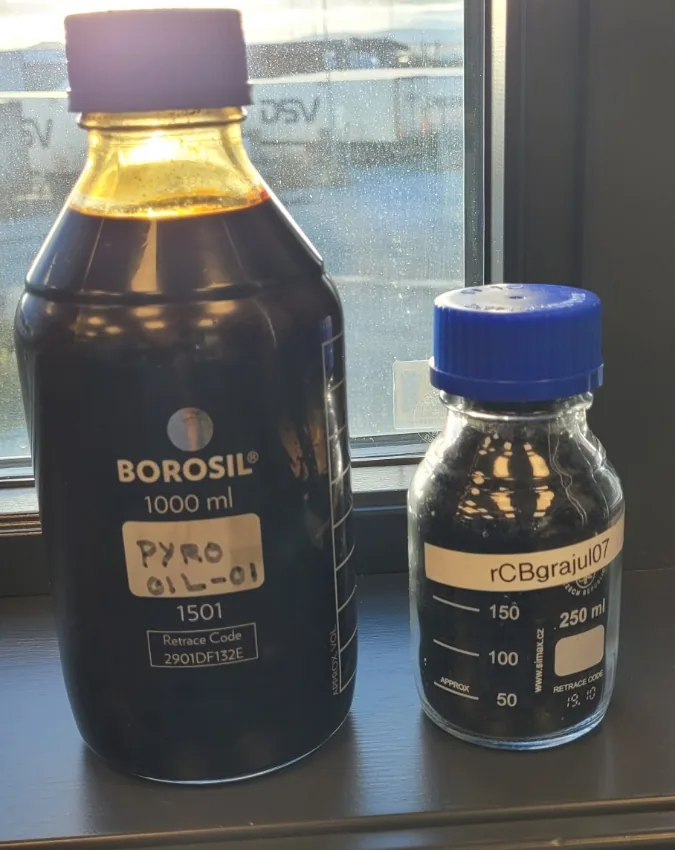
Samples of tyre pyrolysis oil from the pilot plant

Pyrolysis oil samples from the pilot plant

Recovered carbon black (rCB)

Recovered carbon black is the carbon-rich solid left after pyrolysis. It is a sustainable and cost-effective alternative to virgin carbon black with a significantly lower carbon footprint: producing rCB avoids 79–84% of the CO₂ of virgin carbon black manufacture. As demand for circular materials rises, rCB gives manufacturers a way to cut their environmental impact without giving up performance.

Measured properties of pilot material

Carbon
81 ± 5 wt%
Ash
~18 wt%
Sulfur
~2.2 wt%
Primary particles
50–120 nm

At ~81% carbon and ~18% ash the material sits in the recovered-carbon-black band where rCB competes and sells (semi-reinforcing N500–N600 territory). Our target is a declared, qualified rCB grade.

Key advantages

  • Circular substitute: rCB can replace medium to low reinforcement grades of virgin carbon black in rubber, and up to 100% in many non-tyre rubber goods.
  • Lower footprint: every tonne of rCB that replaces virgin carbon black avoids roughly 1.4–2.0 tonnes of CO₂.
  • Resource efficiency: reuses the carbon in tyres that would otherwise be burned.
  • Proven market: tyre makers already sell ISCC PLUS certified tyres built on recovered carbon. Entry is by specification, and that is what we are qualifying for.

rCB is an established blend

Recovered carbon black already replaces virgin carbon black in tyres and rubber goods. The constraint in the market is volume and consistency, not acceptance.

Up to 100%
Non-tyre rubber goods

Masterbatch, mats and flooring, conveyor belts, wetsuits, EVA foam, soundproof panels, plastics, fibre threads, paints and inks.

20–60%
Tyre compounds

Inner liner, liner backing, sidewall and cap tread. Lower modulus and hysteresis, better flex fatigue, tread wear maintained, lower gas permeability in liners.

19×
Demand over supply

About 3.4 Mt of estimated demand against 179 kt of finished rCB in 2023. New plants lift supply to 535 kt – still about 6× short.

Reinforcement class matches N550 / N660 in EPDM, SBR, NR and NBR compounds – a consistent grade at volume is what XPYRO is qualifying for. Sources: Enrestec, Smithers Recovered Carbon Black Conference (2021); Weibold (2024, updates 2025–26).

Steel

The steel reinforcement wire in tyres passes through the process unchanged and leaves the reactor clean of rubber. About a tenth of the input by weight is recovered as steel and sold for recycling.

Syngas – used, not sold

The non-condensable pyrolysis gas is burned in the plant's own furnace and its waste heat raises steam. That is what makes the process energy self-sufficient and what keeps the CO₂ footprint of the products low.

Product qualification

Property values on this page come from analyses of pilot material by SINTEF Energi, Inrigo and Norner AS. Turning characterised material into a product sold against a signed specification is a defined analytical campaign on representative production lots – and the work now under way. If you are an asphalt producer, fuel buyer or rubber compounder willing to specify, we would like to talk.