Waste to value

Turning end-of-life tyres into carbon, oil and steel

XPYRO's patented, energy self-sufficient pyrolysis process recovers the materials locked in waste tyres. Our 10 tonne-per-day pilot plant is built, commissioned and running in Norway.
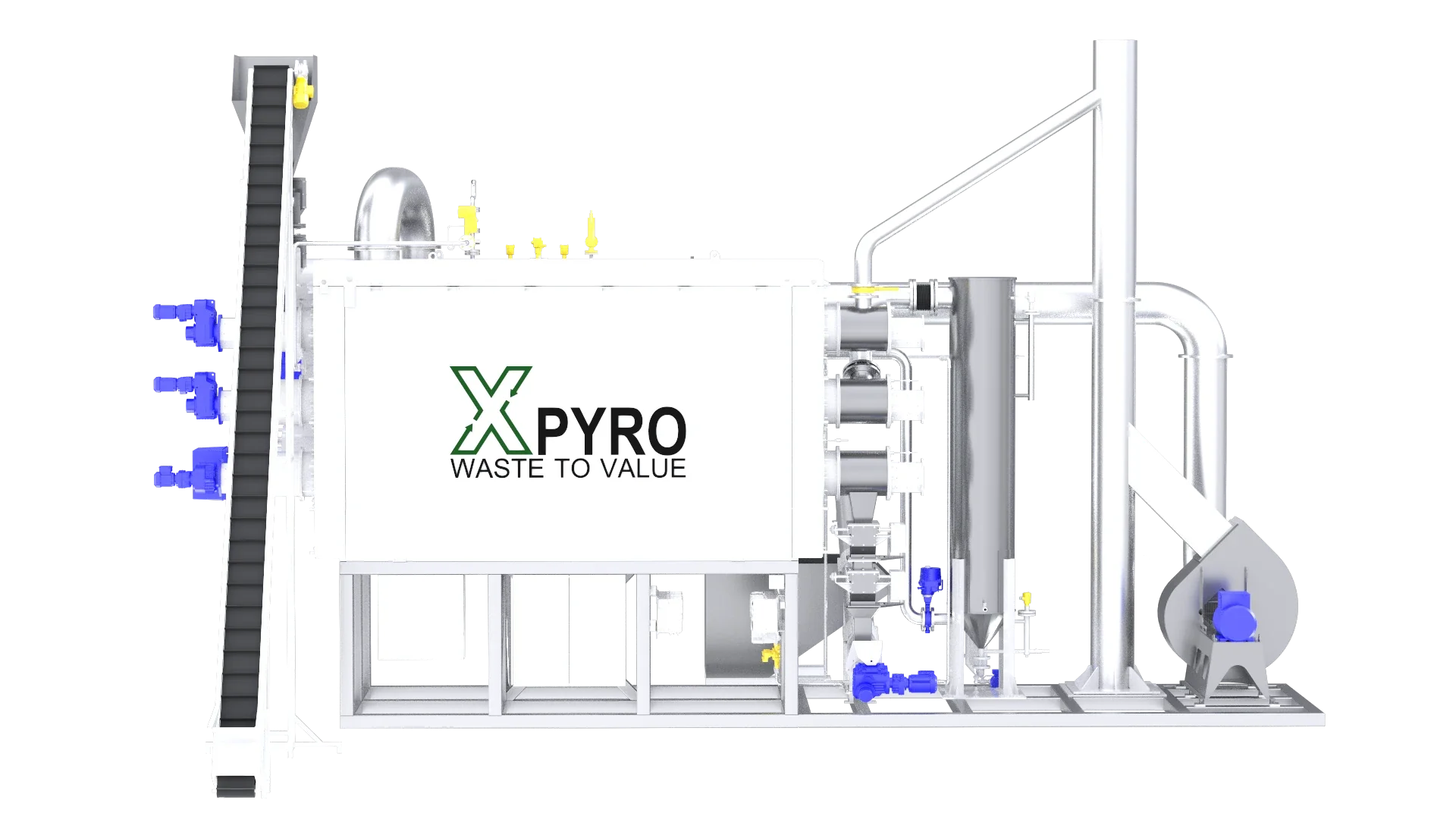
3D model of the XPYRO tyre pyrolysis plant: feed conveyor, insulated reactor, condensers and stack
10 t/day
pilot plant capacity
40–45%
pyrolysis oil yield
~35%
recovered carbon black
~10%
steel recovered
Self-fuelled
runs on its own syngas – no external fuel in operation

Indicative yields by weight of feedstock from pilot operation.

The challenge

1 billion tyres a year

Every year about one billion tyres – roughly 25 million tonnes – reach the end of their life. Europe generates 3.5 million tonnes, Norway around 65,000 tonnes. Most of it is burned as fuel or shipped far away, and the carbon in it is lost.

Our answer

Material recovery, not incineration

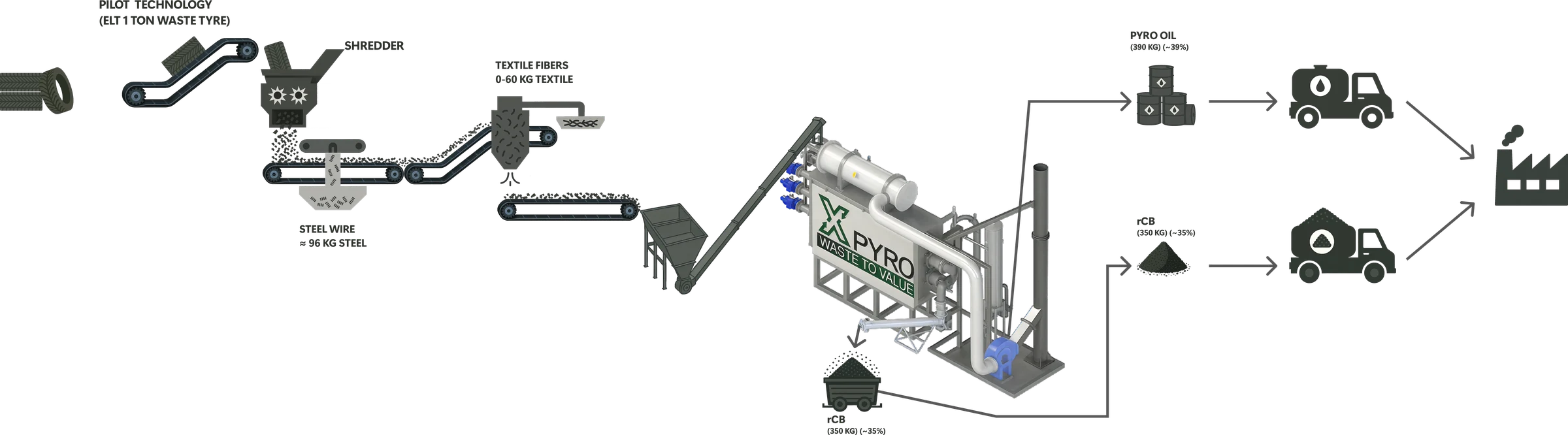
Pyrolysis heats tyre chips without oxygen and breaks the rubber down into oil, a carbon-rich solid and gas. The steel wire is separated and recycled. The gas fires the process itself, so the plant runs without external fuel.

Why XPYRO

Proven at pilot scale

Our multi-auger, steam-integrated reactor is patented in Norway with international applications filed, and a 10 t/day pilot plant has been engineered, commissioned and operated by our team at Heimdal, Trondheim.

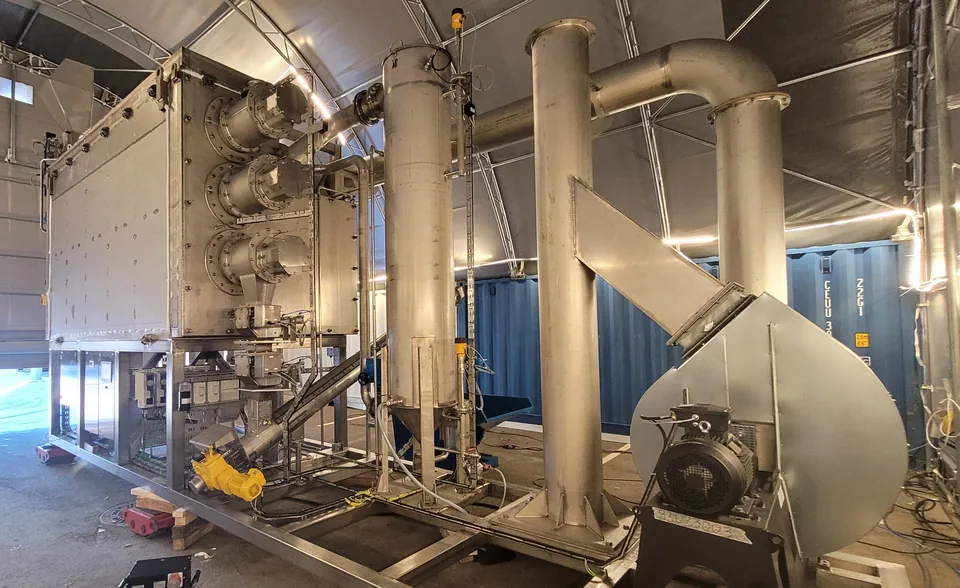
The XPYRO 10 t/day pilot plant installed at Heimdal, Trondheim

Pilot plant

A 10 t/day pilot plant in operation

Designed and built with Inrigo AS, supported by Innovation Norway and tested together with SINTEF Energi and Ragn-Sells. The plant was installed and commissioned at Heimdal in early 2025 and completed its first pilot run on tyre chips in July 2025.

  • 10 tonnes per day, 400 kg/h continuous auger reactor
  • 450–600 °C, oxygen-free, zoned temperature control
  • Syngas and steam recovery – energy self-sufficient
  • Fully instrumented PLC/HMI control with remote data
More about the pilot plant

Circular products

Three products out of one waste stream

Everything that goes in comes out as a product. The pyrolysis gas is not sold – it is burned inside the plant to keep the reactor at temperature.

Tyre pyrolysis oil

An aromatic, energy-rich liquid (~40–42 MJ/kg) for asphalt binder modification, industrial fuel and, after upgrading, chemical feedstock.

Recovered carbon black

A carbon-rich solid (~81% carbon) that replaces virgin carbon black in rubber and plastics with a far lower CO₂ footprint.

Steel

Clean steel wire from the tyre carcass – about a tenth of the input by weight – recovered and sent back to the steel industry.

Product properties and applications

The pyrolysis process at a glance

Illustration of the XPYRO process: tyres are shredded, steel wire and textile are separated, the chips are pyrolysed and the oil and recovered carbon black are shipped to industry

Milestones

Five years of development

  1. 2020–2021
    Concept and patent

    Technology assessment, Innovation Norway grant, Norwegian patent filed.

  2. 2022
    Lab campaign with SINTEF

    Ragn-Sells tyre waste tested in a 5 kg/h reactor. International PCT application filed.

  3. 2023–2024
    Scale-up and patent grant

    Engineering and construction of the 10 t/day plant. Norwegian patent granted June 2024.

  4. 2025
    Plant commissioned

    Installed at Heimdal, test programme completed, first pilot run on tyre chips in July.

  5. Next
    Qualify and scale

    Continuous operation, product qualification with customers, and the first commercial plant.

Build with us. Scale globally.

We are looking for co-development partners, strategic investors and offtakers for recovered carbon black and pyrolysis oil.